Macau China: A Fusion of East and West Cultural Heritage

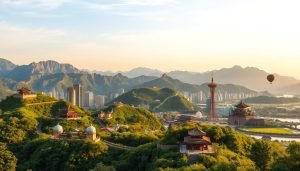
Nestled on China’s southern coast, this remarkable territory stands as one of the world’s most fascinating cultural crossroads. For over 450 years, Portuguese colonial heritage has blended seamlessly with traditional Chinese traditions. This unique fusion creates an extraordinary destination unlike any other.
The region’s strategic position at the Pearl River estuary made it a vital gateway between East and West for centuries. This compact urban area covers just 33 square kilometres yet packs incredible cultural density. It encompasses the main peninsula along with Taipa and Coloane islands.
With over 694,000 residents, this is one of the planet’s most densely populated places. The territory’s rich history as a Portuguese trading post created a distinctive identity now recognised by UNESCO. This recognition celebrates the area’s unique architectural and cultural treasures.
The transformation from historic trading port to modern economic powerhouse is remarkable. Yet the region maintains its rich cultural heritage throughout this evolution. This makes it an essential destination for understanding East-West cultural exchange.
Main Points to Remember
- This special region represents a fascinating blend of Portuguese and Chinese influences
- Its strategic coastal location served as a historic gateway between cultures
- The compact territory packs incredible cultural density into a small area
- Remarkable population density makes it one of the world’s most urban environments
- UNESCO recognition celebrates the unique architectural and cultural fusion
- The area transformed from trading port to economic hub while preserving heritage
- Visitors discover architectural treasures, culinary traditions and rich history
Introduction to Macau China
This special administrative region functions with autonomy that preserves its cultural heritage while embracing modernity. Operating under the “one country, two systems” principle, it maintains distinct economic and legal systems separate from mainland China.
The territory borders Guangdong Province to the north. It sits about 60 kilometres southwest of Hong Kong, making it easily accessible for visitors.
Understanding the Fusion of Cultures
Over 400 years of Portuguese influence blended with Chinese traditions created a unique cultural fusion. This blend is found nowhere else in the world.
The population is predominantly ethnic Chinese, mostly Cantonese speakers. A small but significant Portuguese community and mixed-heritage Macanese people embody this cultural blend.
Chinese (Cantonese) and Portuguese serve as official languages. English is widely spoken in tourism and business sectors, reflecting the territory’s international character.
Purpose of the Ultimate Guide
This guide provides Australian travellers with comprehensive information about this remarkable place. It covers history, attractions, and practical travel advice.
Understanding the territory requires appreciating both its colonial past and Chinese roots. The guide explores its transformation into a global entertainment hub.
| Characteristic | Description | Significance |
|---|---|---|
| Governance | Special Administrative Region | Maintains unique legal and economic systems |
| Cultural Heritage | Portuguese-Chinese fusion | Creates distinctive identity recognized worldwide |
| Accessibility | One hour from Hong Kong by ferry | Easy reach from major regional hubs |
Historical Tapestry: From Portuguese Colonisation to Integration
Historical records show Portuguese ships first appearing in the region’s waters in 1513, marking the start of a remarkable cultural journey. Formal trading relations began forty years later in 1553, leading to permanent settlement by 1557.
This strategic location became the principal trading port between Europe and Asia for many years. European merchants accessed Chinese markets exclusively through this gateway.
Key Events in Macau’s History
The territory served as a neutral zone during wartime conflicts in the 1930s and 1940s. It provided safe refuge for people escaping danger during this turbulent time.
Portugal designated the area an overseas province in 1951. Significant constitutional changes occurred after Portugal’s 1974 revolution, granting greater self-governance.
Transition to a Special Administrative Region
Portugal and mainland china reached a landmark agreement in 1987. This set the stage for the territory’s return to Chinese sovereignty.
On December 20, 1999, Macau became a special administrative region. This peaceful transition guaranteed the preservation of its unique way of life for 50 years.
The territory’s hybrid identity developed through centuries of cultural exchange. This continues to define its character today.
Diverse Cultural Heritage and UNESCO World Heritage Sites
In 2005, UNESCO designated the historic urban core as a World Heritage Site, honouring centuries of cultural exchange. This recognition protects over twenty significant buildings and eight public squares across the peninsula.
St. Paul’s Ruins & Senado Square
The iconic Ruins of St. Paul’s stand as the territory’s most photographed landmark. This baroque facade represents what was once Asia’s largest Catholic church before an 1835 fire.
Nearby, Senado Square features distinctive Portuguese wave-pattern mosaics. Pastel-coloured neo-classical buildings create a Mediterranean atmosphere in the heart of the historic centre.
A-Ma Temple and Other Iconic Landmarks
A-Ma Temple dates back over 500 years, making it the oldest temple in the region. It honours the goddess Mazu and demonstrates a blend of Confucianism, Taoism, and Buddhism.
Monte Fort offers panoramic views from its elevated position. This 17th-century fortress successfully defended against Dutch invasion in 1622.
The Barrier Gate symbolises the region’s role as a cultural threshold. Additional heritage buildings include the Mandarin’s House and Dom Pedro V Theatre.
Macau China’s Architectural and Urban Landscape
From pastel-coloured colonial facades to glittering modern towers, the built environment showcases remarkable transformation. The territory’s architectural journey spans centuries while occupying a compact geographical area.
Portuguese Colonial Influences
Strolling through the historic macau peninsula reveals distinctive European touches. Colourful buildings feature decorative azulejo tiles and wrought-iron balconies that recall Lisbon’s streetscapes.
Iconic structures like the pink Mandarin’s House blend Chinese courtyard design with Western elements. Catholic churches dot the urban landscape alongside traditional Chinese temples.
Traditional architecture persists with feng shui-oriented designs and narrow shophouses. This creates a unique streetscape where East and West coexist beautifully.
Modern Urban Development on Cotai and Beyond
The cotai strip represents dramatic change through massive land reclamation. This connected Taipa and Coloane islands to create new development area.
Mega-resort casinos now dominate this reclaimed land, modeled after Las Vegas but on grander scales. They contrast sharply with the low-rise historic peninsula.
Geographical constraints shaped this development. The hilly terrain limited flat land, making reclamation necessary for expansion.
| Architectural Style | Location | Key Features |
|---|---|---|
| Portuguese Colonial | Historic Peninsula | Pastel colours, decorative tiles, churches |
| Traditional Chinese | Throughout Territory | Courtyard houses, temples, shophouses |
| Modern Mega-Resort | Cotai Strip | Themed casinos, entertainment complexes |
Urban development carefully balances heritage preservation with modernization. Conservation protects historic buildings while new construction focuses on reclaimed area.
Gambling, Tourism, and Macau’s Economic Powerhouse
Since 2002, a dramatic transformation has reshaped the economic landscape through casino liberalisation. The territory now generates more gambling revenue than any other location worldwide.
Casinos and Entertainment Hub
The end of the monopoly system attracted major international operators. Iconic properties like The Venetian Macau and MGM Macau created a world-class entertainment destination.
Gambling revenue forms the backbone of the local economy. It contributes the majority of government tax income and supports extensive employment.
Approximately 75% of workers now serve in tourism and hospitality roles. This shift transformed the economy from manufacturing to services.
| Major Casino Property | Key Features | Economic Impact |
|---|---|---|
| The Venetian Macau | World’s largest casino facility | Employs thousands, major tax contributor |
| Galaxy Macau Resort | Luxury integrated resort complex | Drives high-end tourism spending |
| City of Dreams | Entertainment and gaming destination | Supports convention and event tourism |
The “Vegas of the East” phenomenon attracts millions annually. Visitors seek gambling entertainment, luxury shopping, and world-class dining experiences.
Recent challenges highlight economic vulnerability from gambling dependence. The government now promotes diversification through cultural tourism and conventions.
Food and Culinary Fusion in Macau
The local cuisine represents one of the world’s oldest and most successful fusion food traditions, predating modern culinary trends by hundreds of years. This unique culinary heritage developed over 400 years of Portuguese-Chinese interaction.
Cantonese and Portuguese Cuisine
Macanese food culture beautifully blends Chinese ingredients with Portuguese cooking techniques. Cantonese foundations like dim sum and roasted meats meet Portuguese influences such as olive oil and wine-based preparations.
Signature dishes showcase this remarkable fusion. African chicken combines coconut and peanut sauce with piri-piri spices. Minchi features minced meat with potatoes and soy sauce, while Portuguese egg tarts have become iconic exports.
| Signature Dish | Cultural Influences | Key Ingredients |
|---|---|---|
| African Chicken | Portuguese spices with Asian ingredients | Coconut, peanut, piri-piri sauce |
| Minchi | Chinese-Portuguese comfort food | Minced meat, potatoes, soy sauce |
| Portuguese Egg Tarts | Colonial pastry adaptation | Egg custard, flaky pastry |
“The food tells the story of cultural exchange better than any history book.”
Local Street Food Highlights
Street food offers accessible glimpses into this culinary fusion. Pork chop buns from Tai Lei Loi Kei and almond cookies are popular choices. Lord Stow’s Bakery in Coloane draws queues for their famous egg tarts.
Visitors can explore food hotspots around Senado Square and Taipa Village. Traditional cha chaan tengs serve affordable fusion meals that embody the territory’s blended identity.
Navigating Macau: Transportation and Connectivity
Australian travellers will find multiple convenient options for reaching and exploring this unique cultural hub. The compact size makes getting around surprisingly efficient.
Arriving by Air, Ferry, and Car
Macau International Airport on Taipa Island sits just 10 kilometers from the city centre. International flights connect through Asian hubs like Singapore and Bangkok.
High-speed ferries from hong kong depart every 15-30 minutes. The journey takes about one hour across the Pearl River estuary.
The Hong Kong-Zhuhai-Macau Bridge revolutionised regional access. This 55-kilometer sea crossing reduces travel time significantly.
Australian passport holders enjoy visa-free entry for 30-90 days. This makes adding the territory to hong kong itineraries simple.
Getting Around by Taxi and Bus
Local taxis offer affordable transport with meters starting at MOP$19. Most drivers speak English, making navigation easy.
The public bus network covers the entire area for just MOP$6 per ride. It’s the most economical way to explore different districts.
Major hotels provide complimentary shuttle services. These connect airports, ferry terminals, and key attractions.
| Transport Mode | Best For | Approx. Cost | Travel Time |
|---|---|---|---|
| Taxi | Direct routes, convenience | MOP$19+ | Fastest option |
| Public Bus | Budget travel, local experience | MOP$6 flat fare | Varies by route |
| Hotel Shuttle | Resort guests, airport transfers | Free | Scheduled service |
| Ferry from HK | International arrivals | ~MOP$160 | 55-60 minutes |
The historic peninsula is easily walkable. Larger areas like the Cotai Strip benefit from shuttle services.
Social Life, Governance and Legal Systems
Beyond the glittering casinos and historic sites lies a complex governance structure that defines the territory’s relationship with mainland China. This system ensures the preservation of unique social and legal traditions while maintaining national unity.
One Country, Two Systems Explained
The special administrative region operates under the “one country, two systems” policy established in the Basic Law. This framework guarantees the territory’s capitalist economy and way of life remain unchanged for 50 years from 1999.
A Chief Executive selected by a 300-member committee holds executive authority. The Legislative Assembly combines directly and indirectly elected members with appointed representatives.
The judicial system continues Portuguese civil law traditions. This creates legal autonomy distinct from the mainland.
Education, Health and Community Life
Five years of primary education is compulsory and free for children aged 6-15. Most schools are private institutions receiving government subsidies.
Healthcare combines modern Western medicine with traditional Chinese practices. This approach delivers impressive health outcomes with high life expectancy.
Community life thrives in this densely populated city. Government housing programs address accommodation needs in one of the world’s most expensive property markets.
Experiencing Macau: Top Attractions and Exciting Tours
Discovering the best things to do in this vibrant city is an adventure through time and culture. Your visit offers a rich blend of historic exploration and modern entertainment.
Planning your tour wisely ensures you experience the true heart of this unique place.
Historic Centre and Architectural Gems
The compact macau peninsula contains a remarkable concentration of UNESCO sites. A walking tour here is the best way to appreciate centuries of history.
Follow the pavement mosaics that mark the heritage trail. You will pass iconic landmarks like the Ruins of St. Paul’s and Senado Square within a small area.
For a change of pace, explore the villages on taipa coloane. Old Taipa Village reveals traditional life, while Coloane offers a peaceful waterfront escape.
Curated Tours and Must-See Sights
Guided tour options bring the city’s story to life. Knowledgeable guides explain the fusion architecture and significance of each site.
The best time for these outdoor explorations is from October to December. The weather is warm and perfect for sightseeing.
Many visitors combine their trip with a visit to hong kong. The two cities are just an hour apart by ferry, making a multi-city tour easy to arrange.
Allocate at least two days to see the main attractions. This gives you enough time to enjoy both the historic peninsula and other parts of the city.
Conclusion
Over four centuries of cultural blending have created a destination unlike any other in Asia. This remarkable place has transformed from a strategic trading port into a vibrant global entertainment hub while preserving its unique heritage.
The “one country, two systems” framework has successfully maintained the territory’s distinct character since reunification with mainland china. This approach has allowed economic growth while protecting the Portuguese-Chinese fusion that defines local life.
Massive land reclamation projects and new bridges have physically expanded the city, connecting it to the Greater Bay Area. These developments support the territory’s role as a living museum where historic architecture coexists with modern resorts.
For Australian travellers, this compact city offers exceptional cultural depth beyond typical Asian destinations. The authentic hybrid identity reveals itself through cuisine, architecture, and daily life.
Looking beyond the famous casinos reveals layers of history and warm local traditions. Whether visiting for a brief stop or extended exploration, this unique world destination rewards every visitor with rich experiences.
FAQ
What is the status of the special administrative region?
Why is the historic centre a UNESCO World Heritage Site?
How far is it from Hong Kong and how do I get there?
Is the local economy solely dependent on gambling?
What makes the local cuisine so distinctive?
What are the main areas for tourists to explore?
Tony Simon