Yuan Dynasty History and Cultural Significance Explained
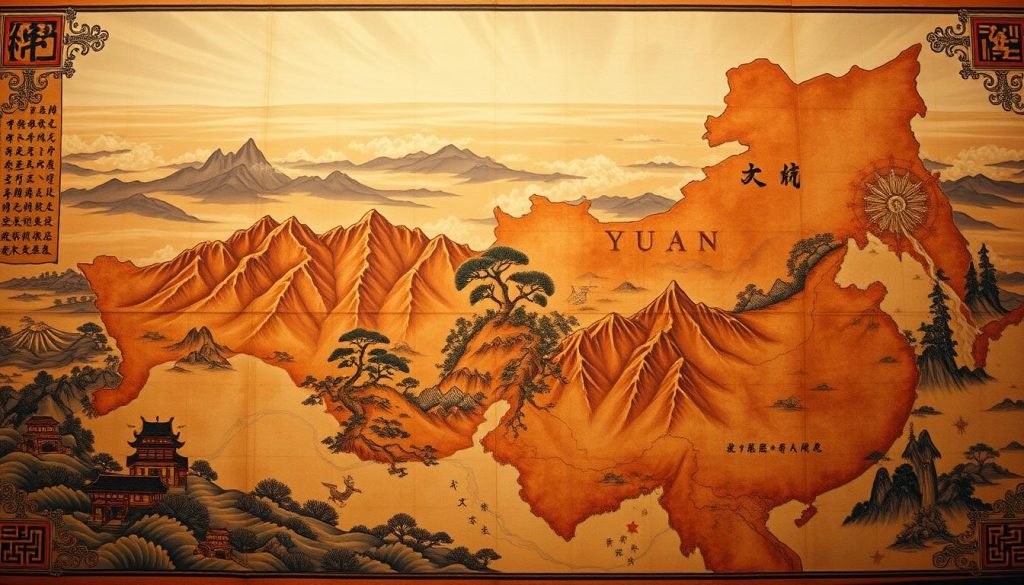
From 1271 to 1368, a remarkable chapter unfolded in China’s long history. This era saw a foreign power, the Mongols, establish their rule over the entire country. It was the first time a non-Han ethnic group governed all of China proper.
The visionary leader Kublai Khan founded this new imperial administration. He positioned his capital at Khanbaliq, the city we now know as Beijing. This period created a unique blend of Mongol traditions and Chinese imperial systems.
This regime acted as a successor state to the vast Mongol Empire after its division. It represented both a continuation of Mongol expansion and a distinct Chinese imperial entity. The era fostered unprecedented international exchange and technological progress.
Despite being under foreign leadership, China experienced significant artistic and cultural innovation. This introductory overview sets the stage for understanding the profound transformations in society, government, and economy. These changes would influence the region for centuries.
Key Takeaways
- The Yuan Dynasty lasted from 1271 to 1368, a pivotal period in Chinese history.
- It was the first time a foreign power, the Mongols, ruled all of China proper.
- Kublai Khan established the dynasty, creating a unique political and cultural landscape.
- The era was marked by significant international exposure and technological advancement.
- It served as a bridge between the preceding Song and succeeding Ming dynasties.
- This period left a lasting impact on Chinese society, government, and culture.
Overview of the Yuan Dynasty
The administration that governed China from 1271 to 1368 bore the official title ‘Great Yuan’ in both Chinese and Mongolian. This dual naming reflected the unique identity of this political entity.
At its peak around 1310, this empire controlled approximately 11 million square kilometers. The territory included modern China, Mongolia, and surrounding regions.
| Statistical Measure | Figure | Year | Significance |
|---|---|---|---|
| Territorial Area | 11,000,000 km² | 1310 | One of largest empires in history |
| Population Estimate | 87,587,000 | 1351 | Vast administrative challenge |
| Duration | 97 years | 1271-1368 | Significant historical period |
The name ‘Great Yuan’ originated from classical Chinese philosophy. It came from the I Ching commentary meaning “Great is Qián, the Primal.”
This naming strategy demonstrated how Mongol rulers used Chinese traditions to legitimize their authority. The era represented both continuity from the Mongol Empire and a distinct Chinese imperial phase.
Historical Context: From the Mongol Empire to Imperial China
Beginning in 1206, a seismic shift in Asian politics commenced with the unification of nomadic peoples under a single banner. Genghis Khan brought together the Mongol tribes, creating what would become the largest contiguous land empire in history.
The Mongol conquests rapidly expanded across Eurasia. By 1259, their territory stretched from the Pacific Ocean to Eastern Europe. This vast domain included northern China, Central Asia, and parts of the Middle East.
This period saw nomadic warriors transform into administrators of settled civilizations. The Mongol approach to governance evolved significantly as they encountered different cultures and political systems.
| Region Conquered | Approximate Year | Significance |
|---|---|---|
| Western Xia & Jin Dynasties | 1209-1234 | First major Chinese territories under Mongol control |
| Central Asia & Persia | 1219-1221 | Expansion into Islamic world |
| Eastern Europe | 1236-1242 | Westernmost reach of Mongol expansion |
The Mongol Empire created the Pax Mongolica, enabling unprecedented exchange across the known world. This peaceful period facilitated trade and cultural transfer between East and West.
These conquests laid the groundwork for Kublai Khan’s later establishment of the Yuan dynasty. The Mongol experience ruling northern Chinese territories proved crucial for governing all of China.
Rise of Kublai Khan and the Formation of the New Order
Unlike his predecessors, Kublai Khan recognised that ruling China required more than military might. His early life proved crucial. His mother, Sorghaghtani Beki, ensured he had Han Chinese tutors.
This education gave him unique insight into the culture he would later govern. He actively sought counsel from Chinese Buddhist and Confucian advisers.
In 1251, his brother Möngke Khan granted him control over Mongol territories in China. Kublai Khan immediately began implementing a new vision. He built schools for Confucian scholars and revived Chinese imperial rituals.
He even issued paper money. His capital at Kaiping, later called Shangdu, became a symbol of his dual identity.
Kublai Khan’s Vision and Leadership
The leader aimed to create a hybrid system. He combined Mongol military strength with Chinese administrative expertise. This approach won him significant support from local elites.
His policies promoted agricultural and commercial development. This showed a reign focused on stable, long-term governance rather than just conquest.
Transition from Nomadic Traditions to Imperial Governance
A critical test came after Möngke Khan’s death in 1259. A kurultai (council) in Kaiping elected Kublai Khan as the Great Khan.
However, a rival council proclaimed his brother, Ariq Böke, leading to civil war. Kublai Khan’s victory in 1264 solidified his path.
It permanently divided the Mongol Empire. It set him on the course to become a true Chinese emperor.
| Key Policy | Implementation | Strategic Purpose |
|---|---|---|
| Confucian Schools | Established early in his rule | Gain support of scholar-officials |
| Chinese Rituals | Revived at his court | Legitimise rule in Chinese tradition |
| Paper Money | Issued to facilitate trade | Stimulate economic growth |
| Capital at Shangdu | Adopted as administrative center | Balance steppe and sedentary identities |
This period marked the transition from a nomadic empire to a settled imperial administration. Kublai Khan’s court became a blend of Mongol and Chinese traditions. His ability to adapt defined his successful reign and the foundation of the new order.
The Mongol Invasions and the Fall of the Song Dynasty
In 1268, Kublai Khan mobilised a massive force to conquer the Song Dynasty. His armies, exceeding one million men, were supported by a large naval fleet. This campaign marked the final stage of the Mongol conquest of China.
The Song Dynasty adopted a defensive strategy of static warfare. They built strong fortifications at key cities and river crossings. This aimed to neutralise the Mongols’ advantage in mobile cavalry.
The pivotal siege of Xiangyang lasted from 1268 to 1273. It was the last major obstacle before the Yangtze River basin. The lengthy conflict showed the Song Dynasty’s stubborn resistance and the Mongols’ determination.
Internal divisions weakened the Song defence. Many generals defected or surrendered to Kublai Khan’s forces. This political infighting seriously undermined their ability to resist.
| Key Event | Date | Outcome |
|---|---|---|
| Surrender of Lin’an (Capital) | 28 March 1276 | Empress Dowager and Emperor Gongzong captured |
| Final Naval Battle | 19 March 1279 | Loyalist defeat at Yaishan |
| Unification of China | 1279 | First complete unification since the 9th century |
Loyalist forces continued to fight for three more years after the capital’s fall. They supported two more child emperors. The final naval battle at Yaishan in 1279 ended this resistance.
This conquest provided Kublai Khan with the legitimacy to fully establish his imperial rule. It was the first time China was unified under a single regime in centuries.
Cultural Fusion and Innovative Achievements
The Mongol period witnessed an unexpected explosion of cultural creativity in China. This era became a golden age for artistic and scientific advancement despite political challenges.
Advances in Art, Literature and Drama
Chinese scholars excluded from government service turned to artistic expression. They developed the literati painting tradition using subtle symbolism in landscapes.
Drama and novels flourished remarkably during this time. Two of China’s Four Great Classical Novels emerged from this creative period. Playwrights developed new forms that would influence Chinese literature for centuries.
Scientific and Technological Progress
The vast Mongol Empire enabled unprecedented knowledge exchange across the known world. Persian and Arab experts brought advanced techniques to China.
Chinese inventions like gunpowder weapons and printing spread westward. This cross-cultural exchange enriched both Eastern and Western civilizations.
| Technology Type | Origin | Impact | Significance |
|---|---|---|---|
| Astronomical Observations | Persian Influence | Improved calendar systems | Advanced scientific understanding |
| Gunpowder Weapons | Chinese Innovation | Revolutionized warfare | Spread globally through trade routes |
| Textile Weaving | Persian Expertise | Enhanced luxury goods | Cultural exchange symbol |
| Paper Money System | Chinese Development | Facilitated international trade | Economic innovation model |
This period demonstrated how cultural fusion could drive innovation. The exchange between different peoples created a cosmopolitan environment that benefited all involved.
Socio-Political Structure and Administrative Reforms
Administrative reforms under Mongol rule established patterns that would influence governance for centuries. Kublai Khan created a hybrid system combining military organization with Chinese bureaucratic traditions.
The provincial system divided China into twelve semi-autonomous regions. This framework became the foundation for later imperial administrations. Each province operated under central authority while maintaining local control.
Key reforms included restoring the Imperial Secretariat and traditional ministries. The government maintained monopolies on salt and iron production. These measures ensured stable revenue through controlled tax systems.
Civil service examinations faced significant changes. The traditional Confucian tests were abolished initially. When reinstated in 1313, Mongol candidates received preferential treatment.
Administrative positions reflected the ruling strategy. Mongol officials held most senior roles, particularly from the imperial bodyguard. Chinese administrators continued in subordinate positions under close supervision.
This approach balanced the need for Chinese expertise with Mongol security concerns. The system created lasting impacts on how China’s government would operate for generations.
Economic Growth and International Trade Networks
Economic prosperity flourished under Mongol administration through strategic commercial policies. The Pax Mongolica created secure routes stretching from China to the Mediterranean. This enabled unprecedented movement of goods and people across the vast empire.
Merchants received significant incentives including tax exemptions and government-backed loans. Ports like Quanzhou became global hubs, handling goods from over 140 trading partners. Infrastructure projects like the extended Grand Canal boosted internal commerce.
The Role of Paper Money and Banking
The administration introduced a sophisticated paper currency system called jiaochao. This innovation facilitated long-distance trade by replacing heavy coinage. Banking institutions developed to support commercial transactions across regions.
Initially, paper money maintained stable value through careful government management. However, later excessive printing to finance military campaigns caused hyperinflation. This economic mismanagement ultimately undermined public confidence in the system.
Despite this eventual decline, the period represented a high point in medieval economic integration. The blend of Mongol protection and Chinese commercial expertise created a unique economic environment.
Religious Tolerance and the Diversity of Beliefs
Religious diversity became a hallmark of governance during this unique period in Chinese history. The Mongol rulers implemented an unprecedented policy of acceptance that contrasted sharply with previous imperial approaches to spiritual matters. This created a cosmopolitan culture where multiple faith traditions coexisted.
The administration officially recognised numerous religions including Buddhism, Confucianism, Taoism, and Islam. Christianity, Judaism, and various folk traditions also received imperial protection. This official status marked a significant departure from traditional Chinese dynasty policies.
Kublai Khan personally embraced Tibetan Buddhism while maintaining respect for other faiths. The imperial court welcomed religious figures from diverse backgrounds competing for influence. This approach characterised the yuan dynasty as remarkably inclusive.
Practical governance needs drove this religious tolerance policy. Mongol rulers understood that accommodating diverse spiritual practices reduced potential resistance. They sought support from different religious communities among their subject people.
The policy enabled significant Muslim community growth through Persian and Arab migration. This religious pluralism left lasting impacts on Chinese society. The approach demonstrated how the dynasty balanced Mongol traditions with practical governance of a diverse population under the yuan dynasty administration.
Government Institutions and Social Hierarchies
To maintain control over their vast territory, the ruling elite created a hierarchical system based on perceived loyalty. This framework established four distinct social classes with varying rights and privileges.
The government placed Mongols at the top, followed by Semu peoples from Central Asia. Northern Chinese formed the third tier, while southern Chinese occupied the lowest position. Each class received different legal and economic treatment.
The imperial administration used this system to divide potential opposition. Southern Chinese faced the harshest restrictions under this structure. They could not hold certain positions or carry weapons in public.
Legal punishments varied dramatically between classes. A Mongol convicted of murder might only pay a fine. A southern Chinese person committing theft faced fines and facial tattooing.
The tax system also reflected this discrimination. Northern Chinese paid household-based taxes while southern Chinese paid according to land area. This approach ensured Mongol military and political dominance.
Cultural restrictions prevented assimilation between groups. Chinese people could not wear Mongol clothing or learn the Mongolian language. The emperor and his court maintained clear ethnic boundaries through these policies.
While effective for short-term control, these discriminatory measures generated deep resentment. This social engineering ultimately contributed to the regime’s collapse when external pressures mounted.
Military Campaigns and Strategic Conquests
Naval warfare and tropical climates presented new challenges for Mongol forces attempting to expand their dominion. Kublai Khan pursued an expansionist policy that stretched the empire’s military capabilities to their limits.
The ambitious campaigns tested traditional Mongol warfare methods. Forces had to adapt to unfamiliar environments and fighting styles.
Key Battles and Tactical Innovations
Japan witnessed two major invasion attempts in 1274 and 1281. Both campaigns ended in failure due to fierce Japanese resistance and destructive typhoons. These storms became known as kamikaze or “divine winds.”
Southeast Asian campaigns proved equally challenging. Invasions of Vietnam, Burma, and Java achieved limited success. The tropical climate and terrain neutralised Mongol cavalry advantages.
Despite these setbacks, some campaigns established tributary relationships. The Pagan kingdom in Burma and Vietnamese kingdoms acknowledged supremacy while maintaining independence. The Duan family in Yunnan became loyal vassals.
Kublai Khan’s forces demonstrated remarkable adaptability. They incorporated Chinese naval expertise and developed new siege engines. However, logistical challenges in distant lands proved insurmountable.
A major rebellion in Tibet during the early 1290s further stretched military resources. The emperor’s expansionist ambitions ultimately revealed the limits of Mongol power projection.
Legacy and Enduring Impact on Chinese History
Few historical periods have left such contradictory yet profound marks on Chinese civilisation. The Mongol-led administration reunified China after three centuries of division, creating territorial boundaries that would define the nation for generations.
This era’s most lasting contribution was the provincial system. This framework became the foundation for governance through subsequent imperial rules and into modern times. The structure demonstrated how effective institutions can transcend their creators.
The cosmopolitan character of this period opened China to unprecedented international exchange. Marco Polo’s travels during this time inspired later European exploration, including Christopher Columbus’s voyages. Cultural and technological transfers enriched Chinese society while spreading innovations globally.
Despite ethnic restoration under the Ming rulers, many governmental practices continued unchanged. This suggests the Chinese restoration involved leadership changes rather than systemic transformation. The experience raised enduring questions about identity and political authority.
The era fundamentally shaped China’s relationship with the broader world. Its legacy remains visible in administrative structures and cultural attitudes that persist centuries later.
Cultural Influences on Modern Chinese Society
Seven centuries later, the creative legacy of this administration remains vibrantly alive in China’s cultural landscape. The artistic achievements from this transformative period continue to shape contemporary identity.
Classic novels like The Romance of the Three Kingdoms and Water Margin originated during this era. These literary works remain central to Chinese popular culture worldwide.
The literati painting tradition flourished under this dynasty’s rule. Its aesthetic principles dominated Chinese art for centuries and still influence modern artists.
Infrastructure projects from this time serve practical needs today. The Grand Canal continues as a vital transportation route for Chinese people.
Muslim communities established during this period persist as integral parts of China’s diversity. Their presence reflects the lasting impact of international exchange.
| Yuan Cultural Element | Modern Manifestation | Significance |
|---|---|---|
| Classical Novels | Film/TV adaptations | Core of Chinese storytelling |
| Literati Painting | Contemporary art styles | Enduring aesthetic principles |
| Grand Canal | Active trade route | Functional infrastructure |
| Religious Diversity | Modern Muslim communities | Cultural pluralism |
This dynasty’s model of cultural fusion serves as a reference for modern cosmopolitanism. The artistic contributions transcend the political legacy, becoming shared heritage.
The Decline: Economic Strains, Rebellions and Natural Disasters
Multiple crises converged in the 1340s, creating a perfect storm that weakened imperial authority. The yuan dynasty faced unprecedented challenges from both nature and its own policies.
Environmental disasters struck with devastating force. The yellow river changed course in 1344, flooding crucial farmlands. This disaster compounded earlier floods from previous years.
Widespread famines followed the flooding, leaving millions hungry. Then the Black death arrived in 1341, killing huge numbers in Hebei province.
Economic policies made the situation worse. The government printed excessive paper money to fund military campaigns. This caused hyperinflation that destroyed the currency’s value.
Desperate measures included outlawing gold and silver coins. Officials forced people to use worthless paper notes while raising tax burdens dramatically. Public confidence collapsed completely.
Political leadership failed during these crises. Mongol princes squabbled over power while the bureaucracy grew bloated. Resources went to favoured generals instead of disaster relief.
This combination of natural disasters, economic collapse and political failure created ideal conditions for rebellion. The suffering population lost faith in their rulers’ ability to govern effectively.
These interconnected crises would ultimately lead to the yuan dynasty‘s fall. The administration could not recover from such comprehensive breakdowns across all systems.
The Red Turban Rebellion and the Rise of Zhu Yuanzhang
In 1351, a peasant uprising erupted that would fundamentally reshape China’s political landscape. The Red Turban Rebellion grew from the White Lotus Buddhist movement, fuelled by heavy taxes and government failures. This widespread rebellion challenged the weakening Mongol administration.
Zhu Yuanzhang emerged as a key leader from humble peasant origins. He joined the Red Turban movement and captured Nanjing in 1356, establishing a strategic base. This victory marked his rise as a formidable military commander.
Between 1356 and 1367, Zhu Yuanzhang systematically defeated rival forces. His victory at the Battle of Poyang Lake in 1363 crushed Chen Youliang’s army. The following year saw Zhang Shicheng’s defeat, consolidating his power.
Zhu Yuanzhang demonstrated exceptional political insight beyond military skill. He abandoned anti-Confucian policies to gain educated elite support. This strategic shift distinguished him from other rebel commanders.
The final Red Turban Rebellion campaign captured Beijing in 1368, forcing the last Mongol emperor to flee. Zhu Yuanzhang declared himself emperor, founding the Ming Dynasty as the Hongwu Emperor. His remarkable journey completed the restoration of Han Chinese rule.
Comparative Analysis: Yuan Dynasty and Ming Dynasty Transitions
The transition between Mongol and Chinese rule reveals fascinating patterns of continuity and change. Despite the Ming Dynasty’s establishment as an ethnic restoration, it preserved many effective administrative practices from its predecessor.
Continuity in Administrative Practices
The provincial system developed under the yuan dynasty continued with minimal changes. Ming emperors maintained this framework because it provided effective territorial control.
Centralised imperial authority became another lasting legacy. The Ming government strengthened rather than weakened this approach during its reign.
Cultural and Political Shifts
The new ming dynasty eliminated discriminatory ethnic hierarchies immediately. Civil service examinations were restored without ethnic quotas, reopening government careers for educated Chinese.
Capital location reflected both rupture and continuity. Zhu Yuanzhang established his initial capital in Nanjing to distance his rule from the previous administration. Later Ming emperors returned to Beijing, recognising its strategic advantages.
This selective adaptation characterised the entire transition. The Ming dynasty maintained effective systems while removing elements offensive to Chinese sensibilities.
Conclusion
The century of Mongol rule over China created a complex legacy that continues to shape historical understanding. From 1271 to 1368, this administration demonstrated how foreign leadership could both challenge and transform Chinese society.
Kublai Khan established a unique hybrid system blending Mongol military strength with Chinese bureaucratic traditions. This approach enabled unprecedented international connections through the Pax Mongolica. Figures like Marco Polo documented these exchanges between China and Central Asia.
The period’s achievements in administration, trade, and culture left enduring marks. However, ethnic discrimination and economic troubles ultimately contributed to the regime’s fall. After 1368, the Mongol court continued as the Northern Yuan in Mongolia.
This era remains pivotal for understanding China’s development. It fundamentally reshaped political structures while opening new global connections that would influence future centuries.
FAQ
Who founded the Yuan Dynasty and when did it rule China?
What was the capital city of the Yuan Dynasty?
How did the Mongol Empire’s rule differ from previous Chinese dynasties?
What were the main reasons for the fall of the Yuan Dynasty?
What was Kublai Khan’s most significant military achievement?
How did the Yellow River contribute to the dynasty’s decline?
Tony Simon